
Arena Poker Philippines – Tables, Guides, and Fast Game Navigation
Arena keeps the poker section tight and practical for Filipino players. You can scan formats, open the right table faster, and check the basics without digging through clutter. The page is built for mobile-first browsing, short sessions, and players who want a clearer route into online poker Philippines.
Start with the format that matches your time and device. If you are here for Texas Hold'em Philippines play, tournament browsing, or a quick look at table structure, the layout keeps the important bits visible early.
Clear table notes, local payment guidance, and responsible play reminders are placed where players actually use them.

Why this poker section feels easier to use
Arena’s poker category is organized for players who want speed, not noise. The structure helps you compare formats, understand the table basics, and move between guides and play options with less friction. It is a cleaner path for poker Philippines browsing on desktop or phone.
Editor’s Note: New players usually get more value from a simple table overview than from a wall of jargon. That is why the page starts with formats, then moves into hand rankings, cash-game structure, and tournament flow in a practical order.
Player Insight: Filipino players who check poker during commute breaks or after work often prefer short, readable blocks. That is why the cards below keep each format compact, with enough detail to decide whether to open a table or keep browsing.
Popular poker formats
The category grid below is educational first, but it also works like a real lobby guide. It helps players understand what each format usually asks from them before they commit time or budget.
Texas Hold'em
The most familiar poker structure for many Filipino players. Two hole cards, five community cards, and betting rounds that move from pre-flop to showdown.
Cash Games
Best for players who want flexible session length. You join a table, play hand by hand, and leave according to the table rules when you are done.
Poker Tournaments
Structured sessions with a fixed start and increasing pressure as blinds rise. Good for players who prefer a defined finish line.
Sit & Go
A lighter tournament-style format that starts when the table fills. Useful for shorter play windows and mobile sessions.
Omaha
A more technical variant that changes how hole cards are used. Players should review the table rules before joining.
Mobile Poker
Designed for touch controls, readable cards, and compact navigation. This is the version many players check first on the phone.
Poker showcase
These are the source images preserved from the original page. They work well as visual anchors for format browsing, game discovery, and brand positioning without adding fake game claims.
Table browsing made simple
Use the poker section to compare table style, session length, and the kind of play you want before you register or join.

Format-first navigation
Players who know whether they want Hold'em, cash games, or tournaments can move faster when the page is arranged by format.

Mobile-friendly reading
Short blocks and clear labels help mobile poker users check the basics without zooming or scrolling through long copy.
What the poker room layer should answer
This section is about practical room questions: which format fits your schedule, how the table behaves, and what a player should check before sitting down. Availability may vary by lobby, so the safest approach is to review the current table list.
Table selection
Look for the structure you want first. Some players want longer cash sessions; others want a fixed tournament path. The room should make that distinction easy to see.
Game pacing
Fast tables suit short breaks. Slower tables suit players who want more time to read betting patterns and position.
Mobile behavior
Touch-friendly controls matter. A good mobile poker layout keeps betting buttons visible and avoids cramped table elements.
Session fit
Weekend players and night players often need different table lengths. The room layout should help you filter by pace, not just by title.
Feature grid
These are the practical checks Filipino players usually care about before joining poker online: table clarity, payment notes, device support, and whether the page gives enough information to make a clean decision.
Texas Hold'em and the core poker flow
This is the format many players search for first, and for good reason. Hold'em is easy to describe but still deep enough to reward careful table reading, position awareness, and patience.
How Hold'em works
Each player receives two hole cards. Five community cards are dealt in stages, and the aim is to make the best five-card hand using any combination of those cards. The action usually moves through pre-flop, flop, turn, river, and showdown.
Blinds keep the action moving. Position matters too, because acting later gives you more information about the table. That is why beginner players should learn the order of play before focusing on fancy moves.
What to watch at the table
Check whether the table is a cash game or a tournament. The pacing is different, the decision-making is different, and the best approach changes with each format.
For mobile users, the main question is simple: can you read the board clearly and reach the buttons without mis-taps? If the answer is yes, the table is usually easier to manage.
Before community cards
Players act after seeing their hole cards, then decide whether to fold, call, or raise according to the table rules.
First three community cards
Hands start to take shape here. Draws, pairs, and board texture become more important.
Fourth community card
Ranges narrow and betting patterns often become clearer. Good players pay attention to position and sizing.
Final community card
The last betting round before showdown in Hold'em. Players make their final decision with the full board visible.
Poker hand rankings
Hand rankings are the first thing beginners should learn. Once the order is clear, table decisions become easier and you can read the board without guessing.
Royal Flush
Ace-high straight flush. Rare, powerful, and the top of the ranking list.
Straight Flush
Five cards in sequence, all in the same suit.
Four of a Kind
Four cards of the same rank, usually a very strong made hand.
Full House
Three of a kind plus a pair. Strong on many boards.
Flush
Five cards of the same suit, not in sequence.
Straight
Five cards in sequence, mixed suits allowed.
Three of a Kind
Three cards of the same rank. Often called trips or set depending on the cards.
Two Pair
Two separate pairs. Useful, but still vulnerable on many boards.
One Pair
One matching pair. Common and often enough to continue in the right spot.
High Card
No made hand. The highest card decides the result if nobody improves.
Cash games and tournaments
These two formats look similar from a distance, but the experience is different. Cash games are flexible. Tournaments are structured. A player who knows the difference can choose better tables and avoid wasting time.
Cash games
Players buy in and the chips represent table value according to the game rules. You can usually leave when you want, which makes cash games useful for shorter or more controlled sessions. Stakes vary from table to table, so checking the lobby first is smart.
Tournaments
Tournaments start at a set time or when a seat fills, and the structure usually becomes tighter as blinds rise. Players are eliminated when they lose their chips, and the final ranking depends on the tournament rules.
| Format | Gameplay Style | Typical Structure | Learning Focus | Mobile Suitability | What to Check |
|---|---|---|---|---|---|
| Texas Hold'em | Community-card poker with two hole cards | Pre-flop, flop, turn, river, showdown | Hand rankings, position, betting rounds | Very strong | Board texture and table pace |
| Omaha | Community-card poker with more hole cards | Similar street structure, different hand use | Card selection and rule discipline | Strong | How many hole cards must be used |
| Cash Games | Flexible table sessions | Buy in, play hand by hand, leave by rule | Table selection and bankroll control | Strong | Stakes, table speed, and session length |
| Tournaments | Fixed-entry competitive format | Increasing blinds and elimination flow | Survival, stack management, timing | Good | Structure, start time, and rules |
| Sit & Go | Quick-start event table | Starts when seats fill | Fast decision-making | Very strong | Seat count and pacing |
Player insights from the Philippines
Local play patterns are often shaped by time, device, and payment habits. The points below are not hype; they are the practical things that tend to matter when a player opens the poker section after work or during a weekend break.
Weekend Poker
Weekend sessions usually give players more breathing room. That makes it easier to review table type, read the lobby, and choose between cash games or a tournament entry.
Night Poker Players
Evening play often works better on mobile because the player already has a routine. Clear layouts matter more than flashy effects when the goal is a short, focused session.
After-work browsing
Many players want a quick check before joining. A simple format grid saves time and helps them decide if they want Hold'em, a tournament, or a lighter table.
Table discipline
Players who review the lobby first usually avoid surprises. That means checking pace, format, and any visible terms before taking a seat.
Player Perspective: Filipino players often prefer a clean lobby and a short route to the table. If the page shows the format, the rules, and the payment note in one view, the decision feels easier.
Mobile poker on Android, iOS, and browser
Mobile poker should feel readable, not cramped. The best layouts keep the cards visible, the betting buttons easy to reach, and the text short enough to scan on a small screen.
What mobile users need
Android and iOS players should be able to move through the lobby without horizontal scrolling. Touch controls need enough space, and the table view should keep important actions in one tap zone.
Mobile browser play also matters. Some players do not want a separate app, so a responsive poker page with readable cards and stable navigation is useful.
What to check before joining
Look at the table size, the format label, and whether the screen makes the betting options obvious. If you need to pinch and zoom just to read the board, it is not a good mobile fit.
For poker PH browsing, compact design beats clutter every time.
Payments and current promotions
Source text confirms GCash support, so the payment note stays focused on that and avoids guessing about other methods. Promotions are handled with the same discipline: mention the category, not fake numbers.
Payment note
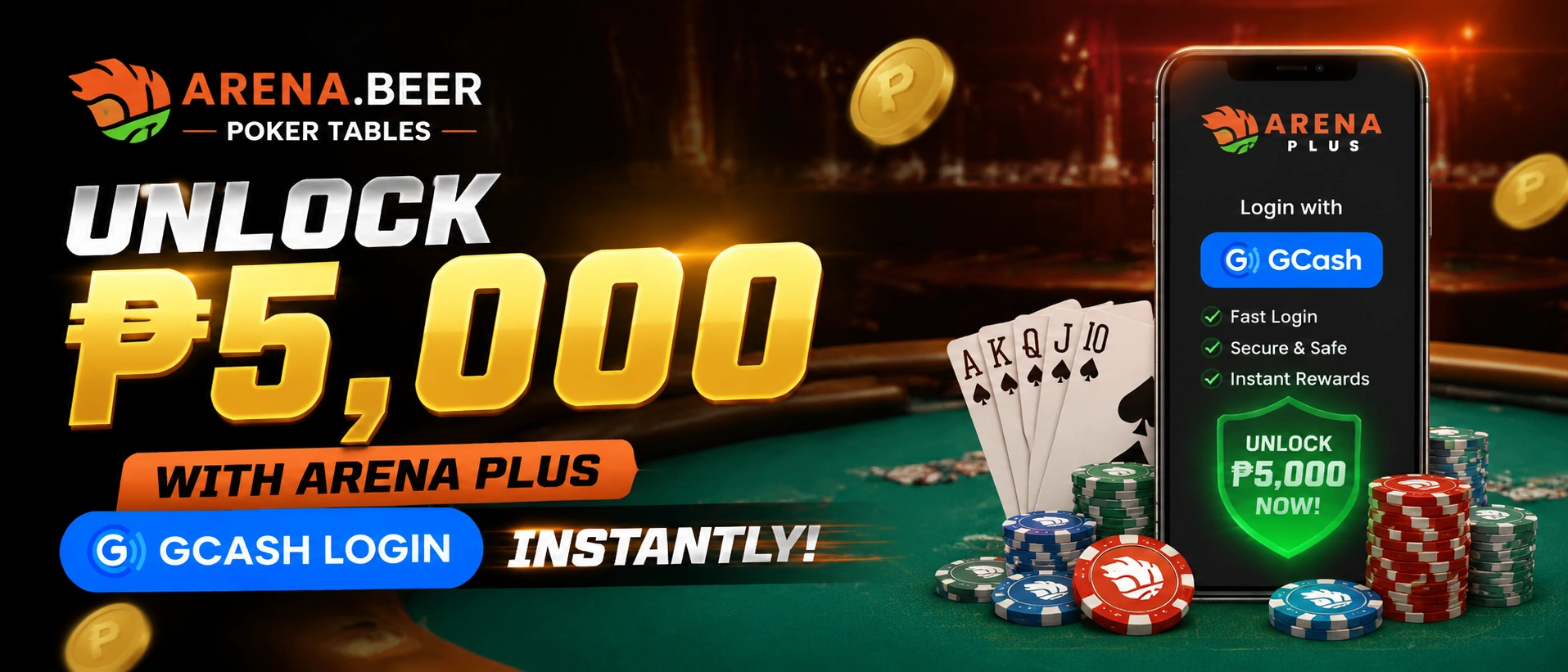
GCash is highlighted for Filipino players who prefer a familiar mobile wallet flow. If the current payment instructions show GCash as available, use the live payment notes on the site and review the terms before you proceed.
Promotion note
The source mentions new-user value such as registration perks and first-deposit style offers, but the exact mechanics can change. Check the current promotion terms before acting on any offer, especially if it depends on eligibility or a specific table type.
Players should always read the conditions first. That is the clean way to avoid confusion later.
Beginner poker guide
If this is your first stop on the poker page, keep it simple. Learn the hand order, understand the betting rounds, and then choose a format that matches your time. That sequence prevents a lot of confusion.
What is poker?
Poker is a card game where players make decisions based on hidden cards, community cards, betting patterns, and table position. The goal is to make the best hand or convince others that your hand is stronger than it is.
Texas Hold'em is the easiest place to start because the rules are common and the board structure is easy to follow.
How beginners should approach the table
Start with a table you can read. Smaller, clearer sessions are easier to manage than busy tables with too much action. Learn the ranking list, then pay attention to position and betting rounds.
Do not rush into every hand. Folding is part of the game, and it keeps your session cleaner.
Practical strategy tips
These are not miracle tricks. They are table habits that help players stay organized and avoid sloppy decisions, especially when playing on a phone or during a short break.
Know your position
Acting later gives you more information. That matters in both cash games and tournaments.
Respect table stakes
Choose a level that fits your session budget. Bigger stakes make mistakes more expensive.
Do not chase losses
If a session is going badly, step away. Chasing is usually how a small problem becomes a bigger one.
Read promotion terms
If an offer is active, check the conditions before you rely on it for your session plan.
Practical Tip: Set a stop point before you open the table. A clear limit makes poker feel more controlled, especially for mobile players who join in short windows.
FAQ
Ten quick answers for Filipino players who want the basics without a long read.
Is Arena an online poker platform for Filipino players?
What poker games are available at Arena?
Does Arena offer Texas Hold'em?
What are the basic poker hand rankings?
What is the difference between cash games and poker tournaments?
Can I play online poker on Android and iOS?
Does Arena support GCash or Maya for Filipino players?
How do poker promotions work?
What should beginners know before joining a poker table?
What should Filipino players consider before playing online poker?
Explore Arena Poker Philippines
Use the poker category to compare tables, check the format that fits your schedule, and register when you are ready. The page is built for Filipino players who want a cleaner route into poker without unnecessary clutter.
Responsible gaming
Set a budget before you start, take breaks during longer sessions, and stop when the game stops being enjoyable. Read the promotion conditions, avoid chasing losses, and treat poker as discretionary spending.
Check the rules, keep your session limits realistic, and use the table only when you are clear-headed. If you need a pause, take it.
Contact and site links
Use the approved site paths below to move around the brand safely. No extra paths are added here.